
Pogonology
Study of Beards

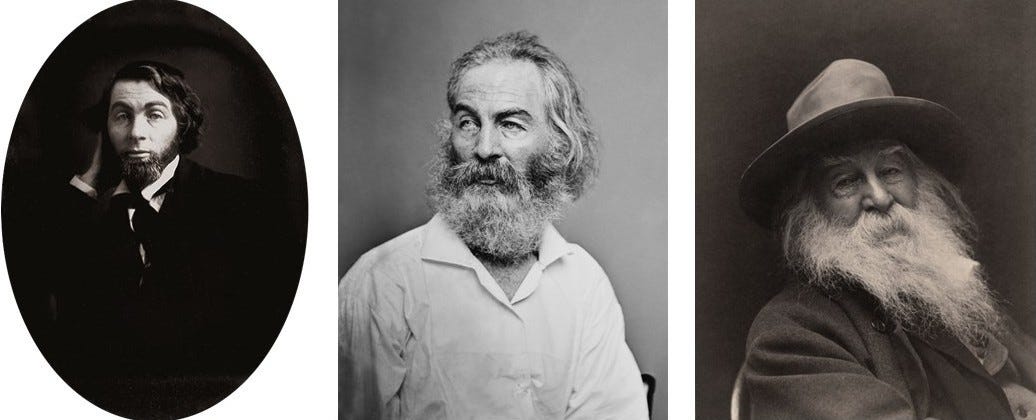
Left to right - Walt Whitman at age 28, Feb-May 1848, New Orleans’ Walt Whitman in 1862 at age 43, photo taken by Matthew Brady; Walt Whitman in 1887, age 68, photograph by George C. Cox; Wikimedia Commons.
I learned a new word while deciding about this week’s post. Pogonology – the study of beards. Thanks to the Oxford English Dictionary, I even learned some ancient Greek - πώγων, (pogon) meaning beard. All things come with a story from the past, facial hair included. I enjoyed reading Christopher Oldstone-Moore’s 2016 book, Of Beards and Men: The Revealing History of Facial Hair.
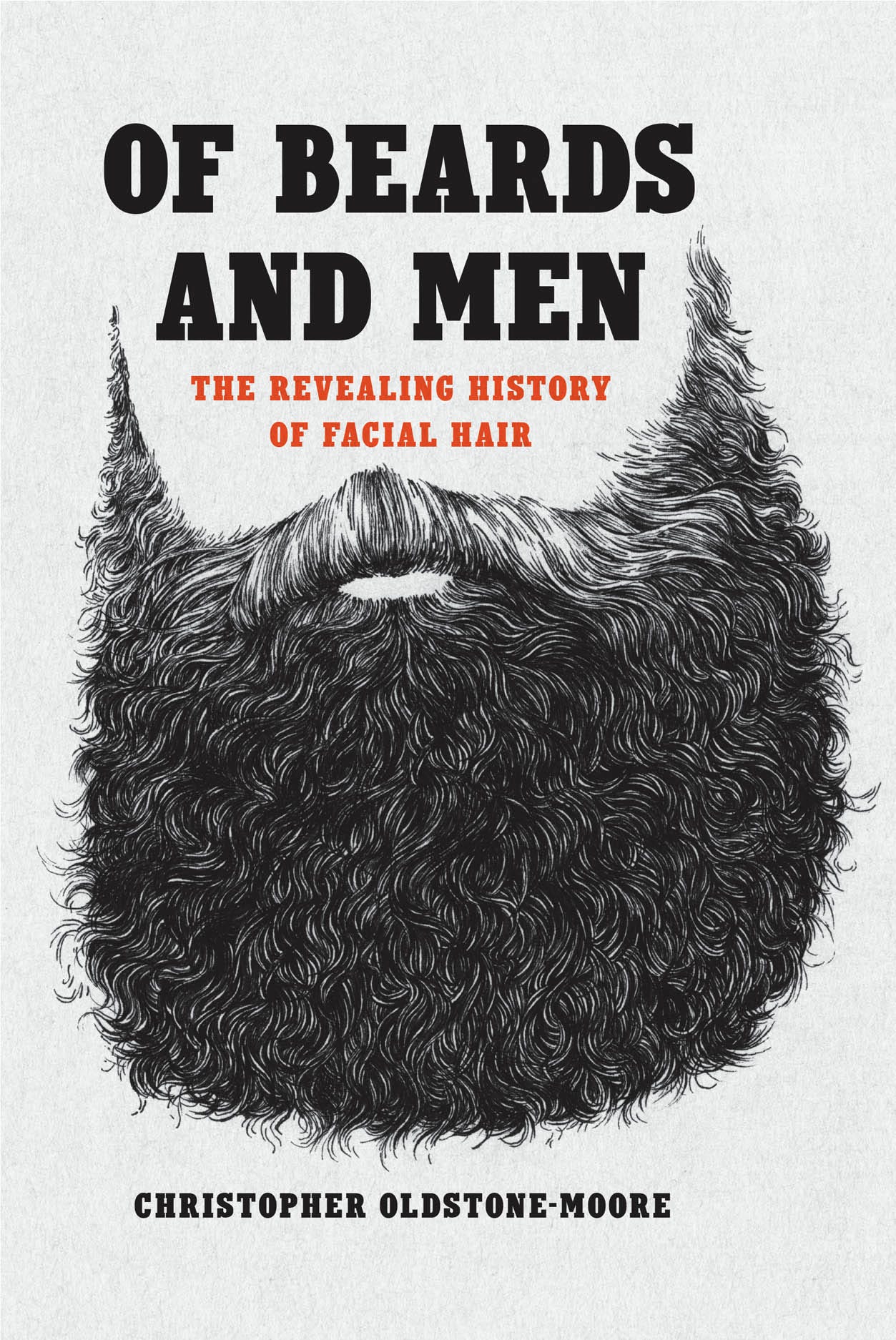
University of Chicago Pres, 2016.
Famously the American poet, Walt Whitman (1819 – 1892) lauded beards, brave man and muscular, honest living. Although in later versions of his book, Leaves of Grass, he removed a line about beards in the first 1856 edition he wrote “Washes and razors for foofoos—for me freckles and a bristling beard.”1 Whitman drew this slang word – foofoo – from a popular play of 1850s New York, A Glance at New York. Foofoos are cowardly and affected, trying to be something that they are not.2
A little later than Whitman, Abraham Lincoln changed his appearance and grew a beard. Other male leaders also emphasized their masculinity and individuality. Louis-Napoleon Bonaparte, during the French Second Empire experimented with beard styles, finally coming to a goatee and full mustache.
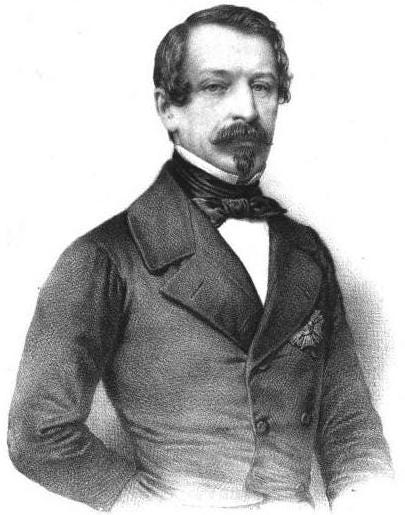
Louis-Napoléon Bonaparte 1808 – 1873, (Léo Lespès, Histoire politique, anecdotique et philosophique de la I Template: Ere présidence, t. I, Paris, 1852. Wikimedia Commons.
In my HIST 324 Modern Europe history course, I begin class focused on “Progress in the 19th Century” with images of Karl Marx (1818 – 1883) and Charles Darwin (1809 – 1882).
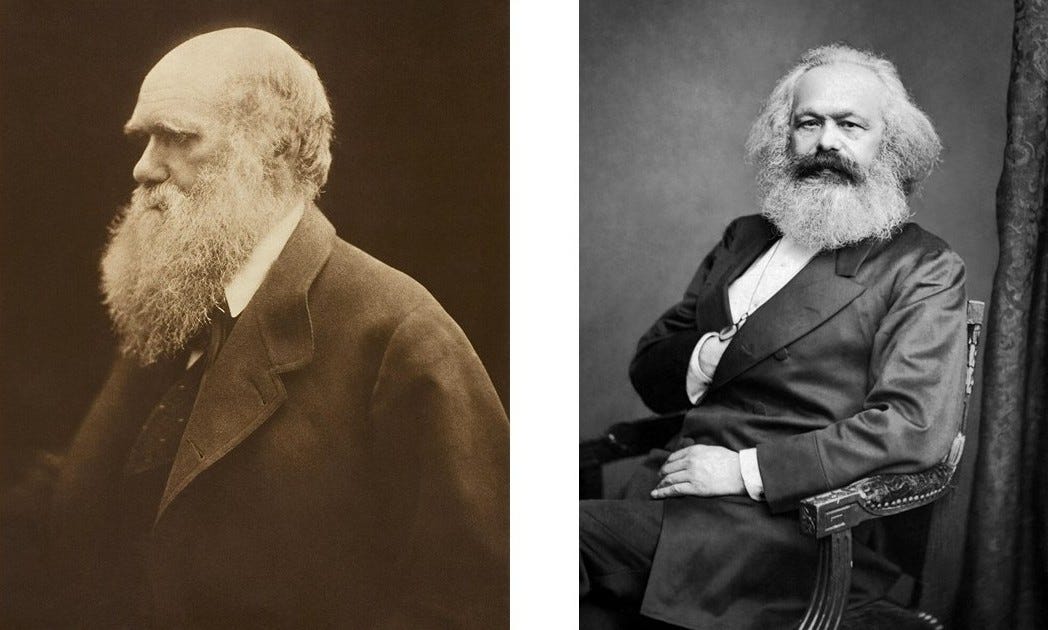
Charles Darwin by Julia Margaret Cameron, 1868; Karl Marx by John Jabez Edwin Mayall, 1875.
Both thinkers, Marx and Darwin, theorized about change and progress. The juxtaposition of their portraits, similar with beards, but different in theorization make for a memorable learning moment. People in the 19th Century lived through many changes – industrialization, rapid globalization, demographic increases, communication innovation, accelerated transportation, etc. They called it progress.
Change will come – styles of facial hair will grow and disappear with time.
Walt Whitman, “Poem of Walt Whitman, and American” Leaves of Grass (Brooklyn, New York, 1856) page 38; https://whitmanarchive.org/published-writings/leaves-of-grass.
(see Kenneth G. Johnston and John O. Rees. “Whitman and the Foo-Foos: An Experiment in Language.” Walt Whitman Review 17.1 (1971): 8.
It is so interesting to me to watch beards and mustaches come in and out of fashion through the years. I'm delighted to know that the study of beards is called pogonology.
Thanks for the addition to my vocabulary!