
Instructor

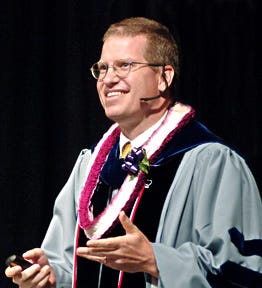
James B. Tueller, BYUH Convocation, September 2006 (Wow! 20 years ago.)
Teacher/Instructor – that’s me. Sharing what I learn makes me happy and teaching keeps me learning. Here’s something I learned about teaching and instructing.
The verb “to teach” is an old Germanic word with older roots that meant “to show.” With the Norman conquest of England, many French and Latin words also entered English. Instruct/Instructor/Instruction show this. Instruere meant to “build up” as the struere meant build with same origins as structure, construct and destroy. I was delighted to find an even older Indo-European root in the Latin word struere linking Classical Latin and Old Germanic to lay flat or scatter about still in the English word “strew.” As an instructor, as a teacher, I like the comparison between teaching and building, laying materials out flat or even strewn about and then structuring them into a useful building. If you are wondering where the evidence for these connections come from, use the on-line Oxford English Dictionary which has entries on etymologies for each word, plus evidence from books when that usage of the word can first be documented. (See “History with Jim” post Reference Sources on September 3, 2024)
Dictionaries instruct tremendously. Students can read older English dictionaries like Noah Webster’s twenty-six-year project of An American Dictionary of the English Language (1828) or Samuel Johnson’s A Dictionary of the English Language (1755). Learning other languages also will help in researching the past. Jean Nicot (1530 – 1604) worked on Thresor de la langue françoyse tant ancienne que moderne published in 1606. Nicot also brought tobacco plants back from Portugal when he traveled to Lisbon, representing the French king. Nicotine is named after him. A team of scholars in Florence, Italy published the Vocabolario degli Accademici della Crusca in 1612, organizing the entries alphabetically, a new way instead of topically as had been done previously.
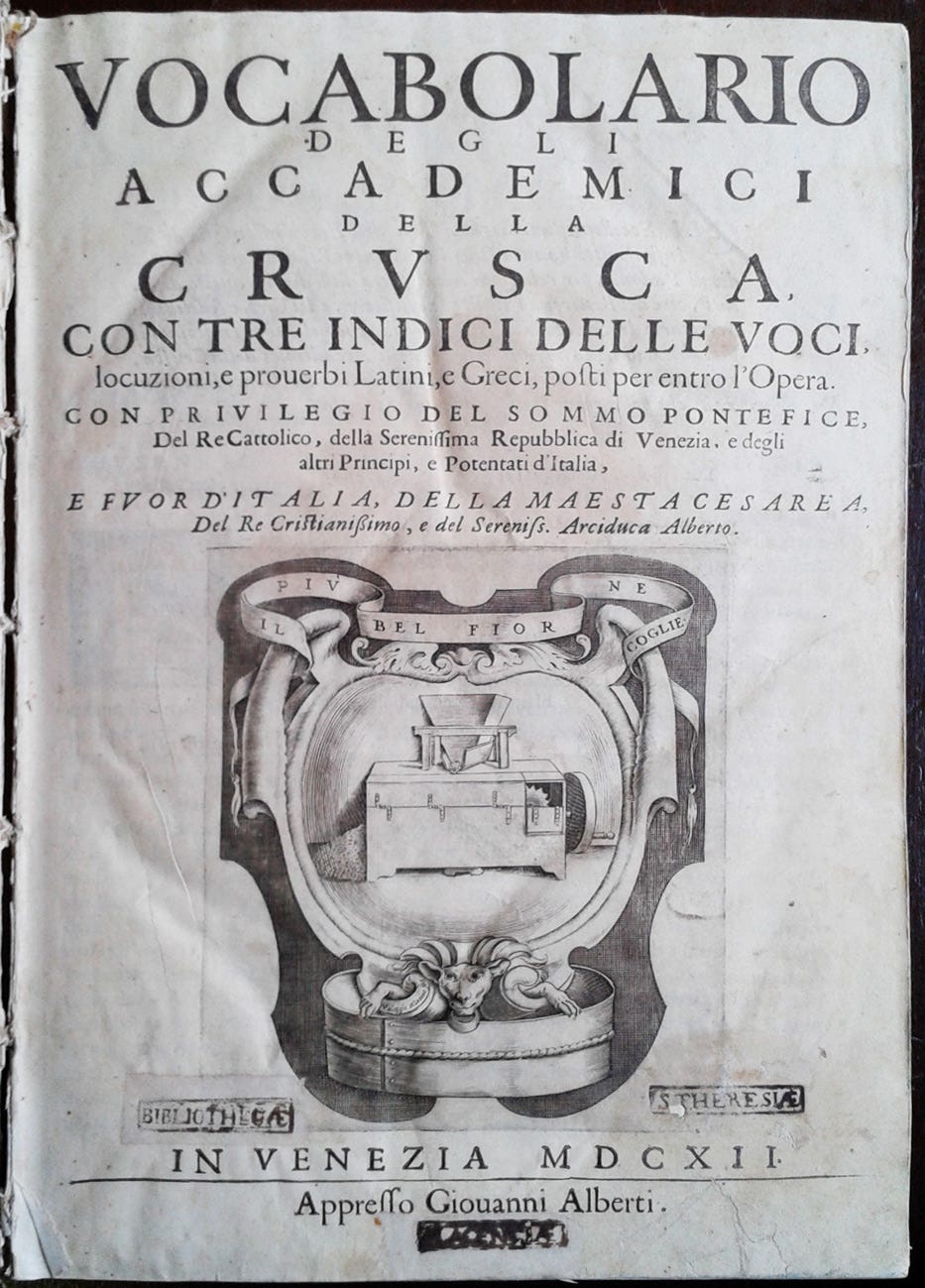
1612, Wikimedia Commons.
I have instructed for many years. My first paid teaching job was as a tutor for 7th and 8th graders at the American School of Madrid. At the beginning of my 12th grade year, the college counselor, Sarah Reese, interviewed all the seniors to talk about college applications. When I visited with Ms. Reese, she first asked if I was Mormon. I said “yes.” Currently, I’d also add that the label Mormon is more than just members of the Church of Jesus Christ of Latter-day Saints, but I’m part of the historical Mormon movement. Wikipedia also calls it the “Latter Day Saint movement.” Back to my story. Remember, the ideas are strewn about.

American School of Madrid, 1984 Yearbook.
The ASM counselor asked if I was going to apply to BYU. I said “yes.” “Makes sense,” she said. “It’s a great education and a good price.” So that was my college counseling. Also, Ms. Reese had a proposal for me. Parents of Junior High School students wanted a tutor for after-school homework help. I took the job and enjoyed helping the kids with their assignments. It was mostly keeping them on task and making it fun. Learning and teaching go hand-in-hand. I’m lucky to be an instructor, even with short, weekly post, I enjoy the teaching and learning.